English to Spanish Product Image Translator for E-commerce Sellers
Selling into Spanish-speaking markets is one of the fastest ways for e-commerce brands to unlock new growth. But many sellers make the same mistake when they expand: they translate the product title and bullets, while leaving the product images in English.
That creates friction immediately.
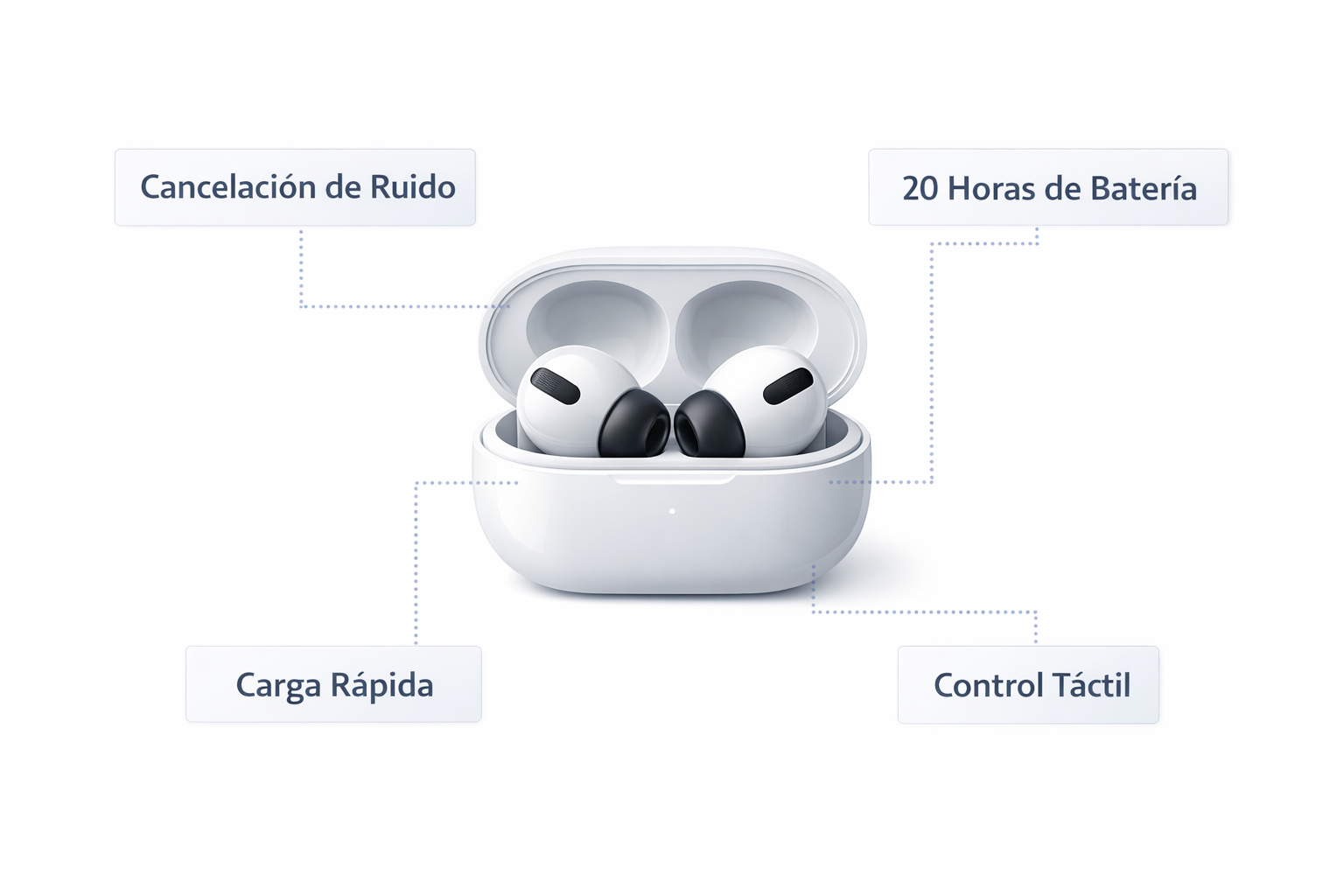
A shopper may understand the category and headline, but when the size chart, feature callouts, usage instructions, or comparison graphics are still in English, the listing feels incomplete and harder to trust.
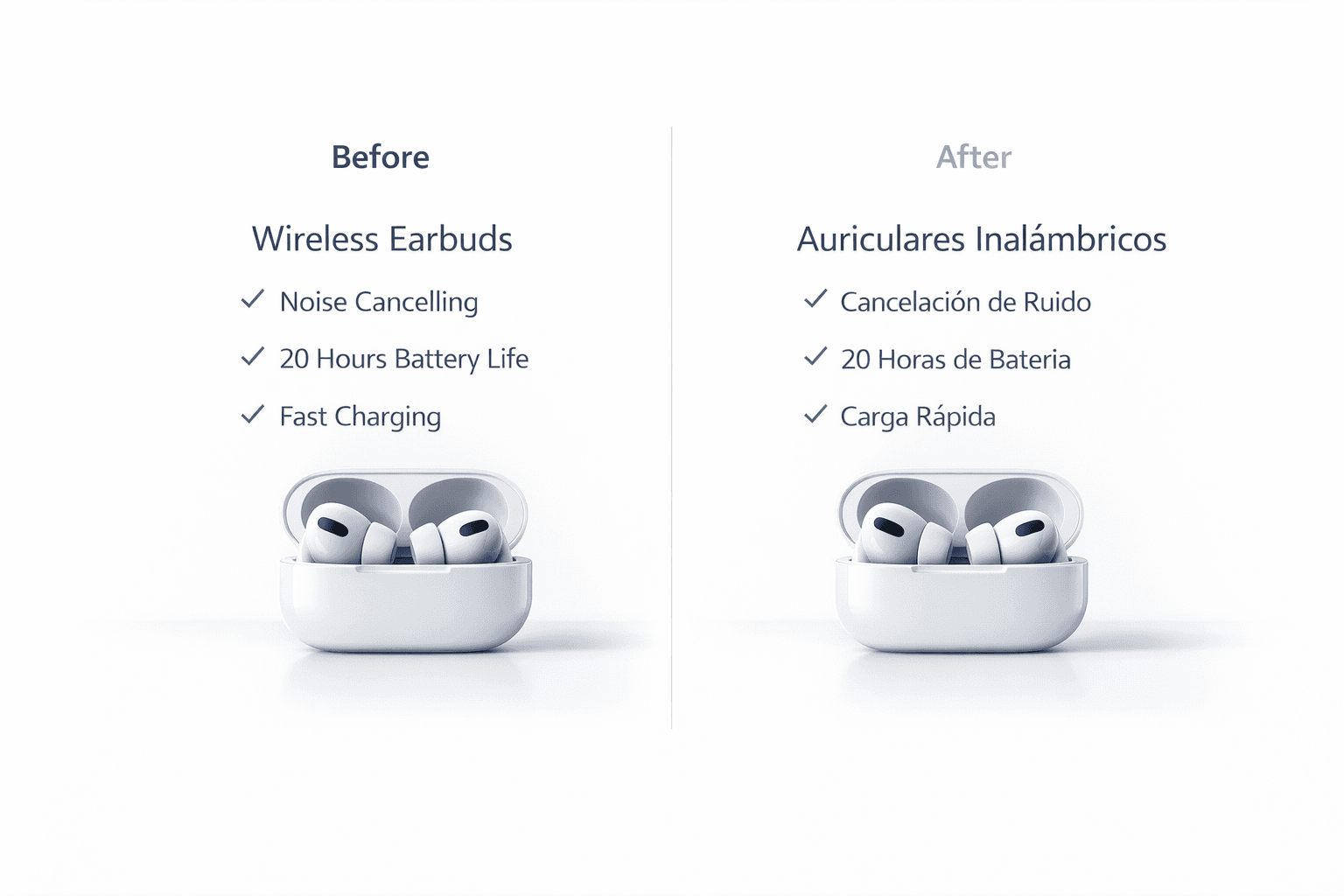
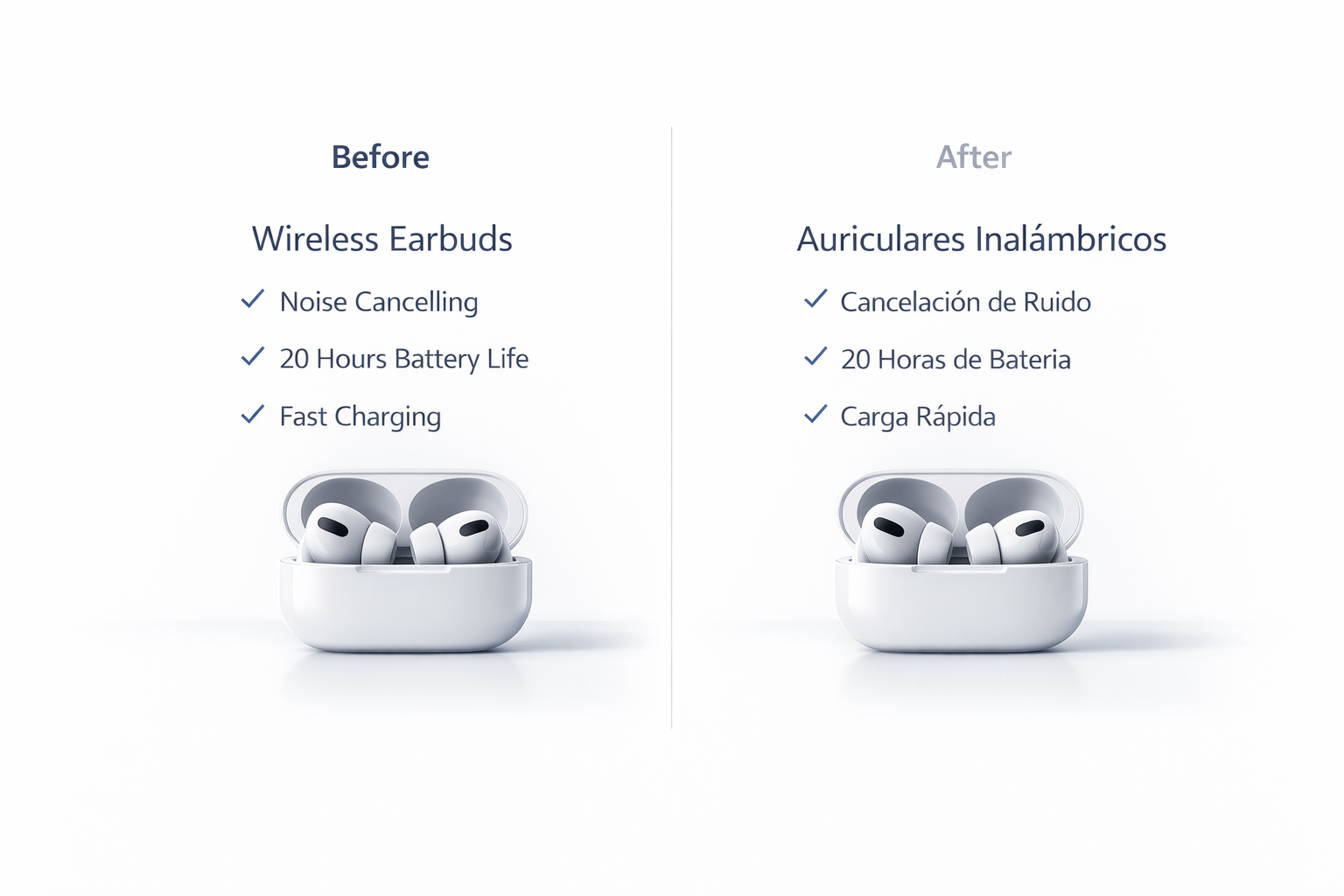
An English to Spanish product image translator helps solve that problem by translating the text inside your product visuals while preserving the original design, layout, and selling logic.
 Caption: Turn existing English product visuals into Spanish-ready selling assets without redesigning the whole image.
Why product image translation matters in Spanish-speaking markets
For many sellers, product images do more selling than the product title itself.
Your visuals often contain the most persuasive parts of the offer:
- key feature callouts
- product benefits
- size charts
- comparison tables
- usage instructions
- material or ingredient highlights
- trust-building claims
If that information stays in English, Spanish-speaking shoppers have to work harder to understand the product. That slows comprehension, weakens confidence, and can lower conversion.
This matters whether you are selling to:
- customers in Mexico
- shoppers in Spain
- broader Latin American marketplaces
- Spanish-speaking buyers in the United States
What an English to Spanish product image translator should do
A useful e-commerce image translation workflow should do more than extract text.
It should help you:
- detect text accurately inside product images
- translate e-commerce phrasing naturally into Spanish
- remove the original English text cleanly
- reconstruct the background behind the removed text
- place the Spanish text back into the image without breaking the layout
- preserve readability on mobile listing pages
The goal is not just translation. The goal is to create a Spanish version of the image that still looks native, clear, and ready to sell.
 Caption: Good image localization keeps the original visual structure while adapting the text for Spanish-speaking shoppers.
Which product images should you translate first
If you are just getting started, do not try to localize every asset at once. Start with the visuals that most directly influence buying decisions.
1. Feature and benefit graphics
Translate the images that explain what the product does and why it is better.
Examples:
- "why choose us" graphics
- product benefit infographics
- comparison images
- key value proposition panels
2. Size charts
This is one of the highest-impact image types for apparel, footwear, and accessories. If shoppers cannot understand sizing quickly, they are more likely to hesitate or return the product later.
3. Instruction and usage visuals
If your product requires setup, application, or simple onboarding, usage graphics should be translated early.
Examples:
- installation steps
- usage tutorials
- care instructions
- before-and-after explanations
4. Promotional graphics
If you are running market-specific campaigns, your discount, bundle, or limited-time visuals should match the language of the buying journey.
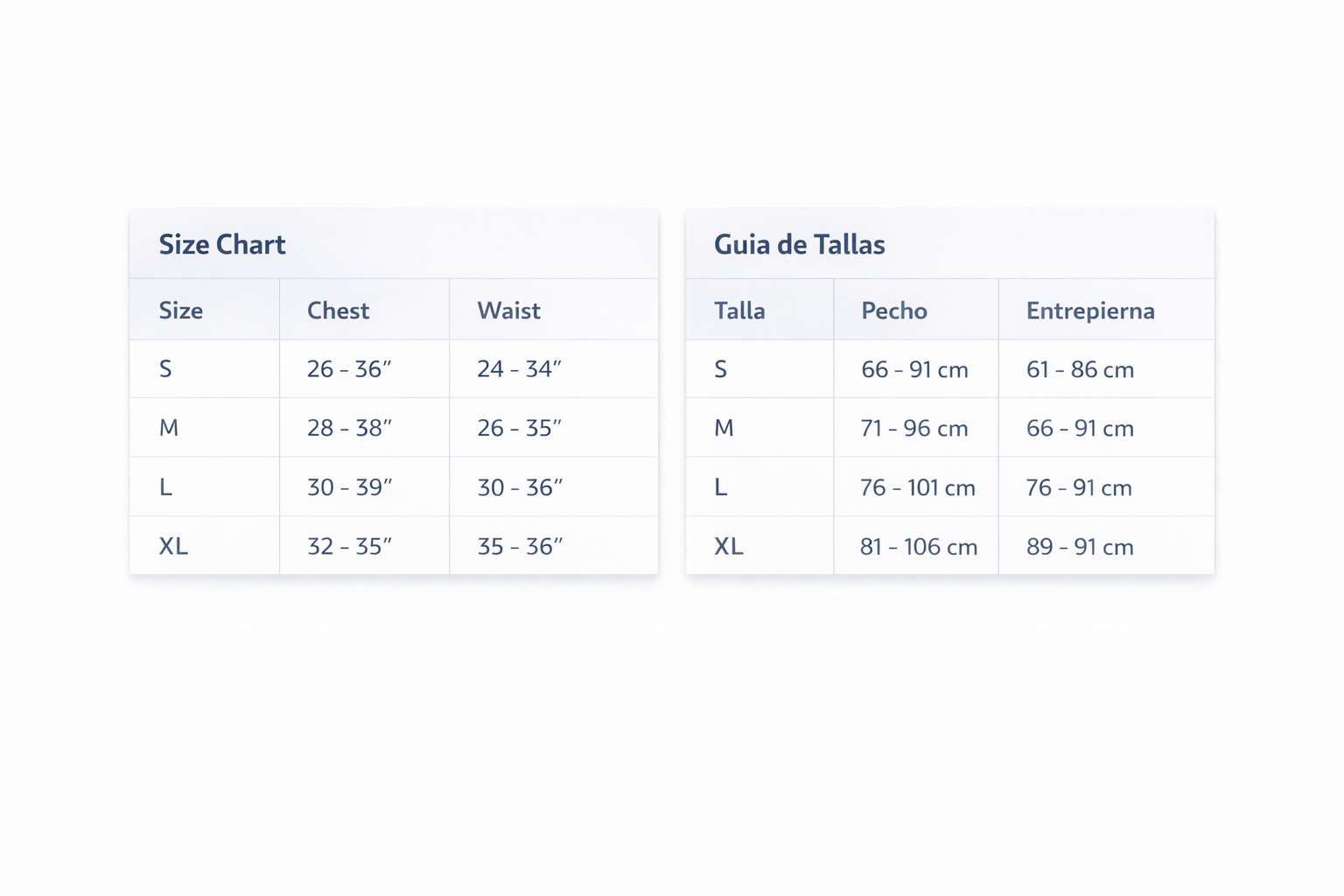 Caption: Size chart localization is often one of the fastest wins for fashion and apparel conversion.
Start Translating Product Images for Spanish Markets
Use VOKWA AI to translate text inside product visuals and reconstruct the original design in one workflow.
Common mistakes when translating English product images into Spanish
Many sellers treat image translation like simple text replacement. That usually leads to weak results.
Mistake 1: Translating word-for-word
A literal translation may be technically correct but still sound unnatural in a shopping context. Product visuals need short, persuasive, consumer-friendly phrasing.
Mistake 2: Breaking the layout
Spanish text is often longer than English. If spacing is not adjusted, the final result can look crowded or unbalanced.
Mistake 3: Ignoring background reconstruction
If the original English text is removed badly, the image will look edited. A polished result should restore the background texture or color before the new text is placed.
Mistake 4: Using inconsistent terminology
If one image says Tabla de tallas and another uses a different style for the same concept, the listing can feel inconsistent and less professional.
Mistake 5: Translating everything with equal priority
Not every piece of text matters equally. Start with the copy that drives understanding and confidence first.
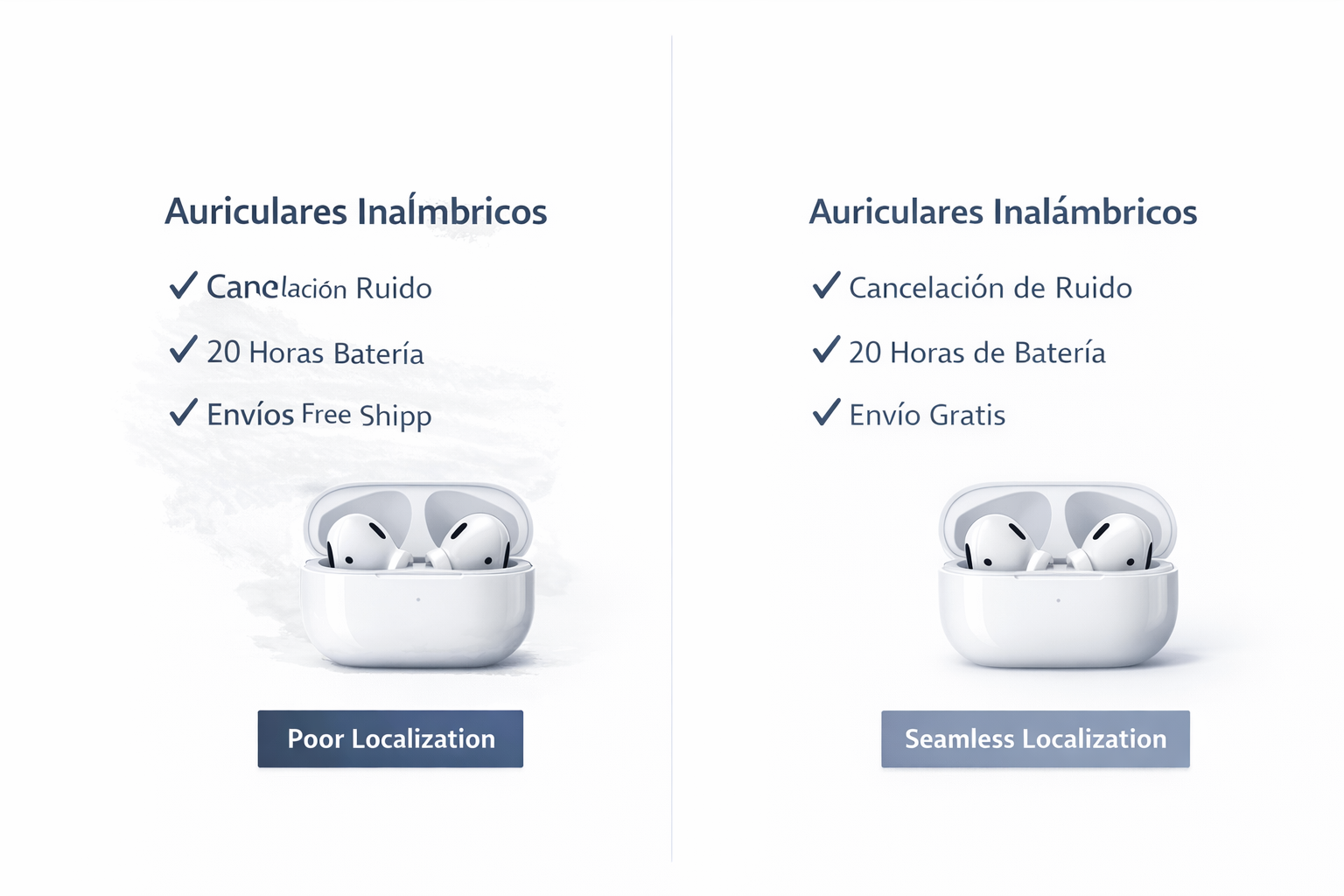 Caption: Clean background reconstruction and better spacing make translated visuals feel native instead of edited.
How to translate product images from English to Spanish efficiently
The fastest approach is to localize your existing English assets instead of rebuilding them from scratch.
Step 1: Gather the visuals that influence conversion
Start with the product images that answer the buyer's biggest questions:
- What does the product do?
- Why is it better?
- How do I use it?
- How do I choose the right size?
Step 2: Prioritize the top 3 to 5 images first
You do not need to localize your full creative library on day one. Start with the few images that carry the most selling information.
Step 3: Use an image translation workflow built for e-commerce
With VOKWA AI, sellers can turn English product visuals into Spanish-ready assets more efficiently.
Typical workflow:
- upload the original English image
- choose Spanish as the target language
- let the system detect and translate in-image text
- review the result
- make minor adjustments if needed
- export the localized image
Step 4: Review the final image like a shopper would
Before publishing, check for:
- mobile readability
- natural Spanish phrasing
- visual cleanliness
- consistent terminology
- balanced spacing
A strong localized image should feel like it was originally designed in Spanish.
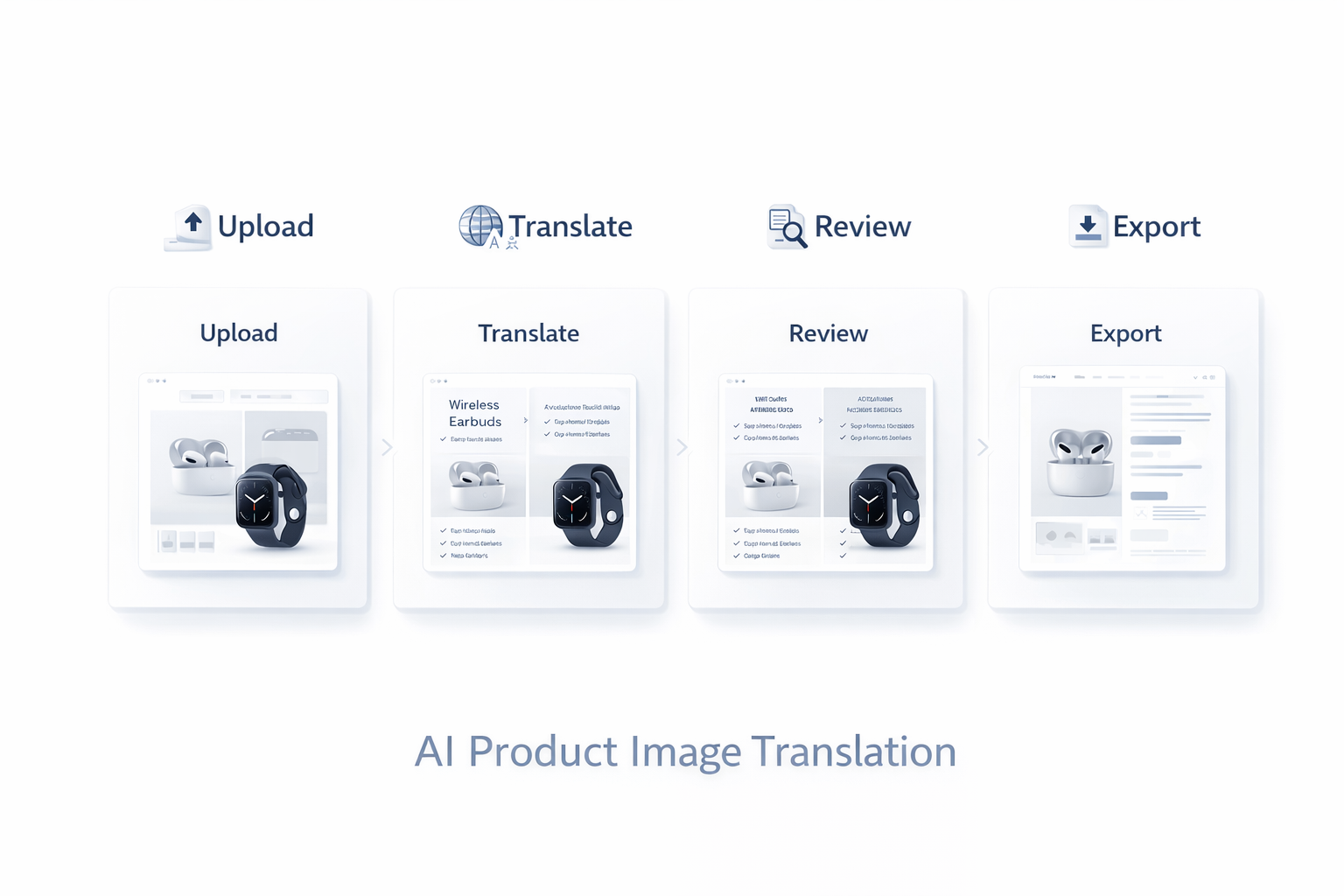 Caption: A practical workflow for converting English product images into Spanish-ready marketplace visuals.
Ready to Localize Existing Product Images?
Keep your original layout. Replace English text cleanly. Move faster into Spanish-speaking markets.
Best use cases for English to Spanish product image translation
This workflow is especially useful for:
Amazon sellers expanding into Mexico
If you already have optimized English listing creatives, translating them into Spanish is usually much faster than redesigning everything from zero.
Shopify brands targeting Spanish-speaking buyers
Localized visuals can improve consistency across product pages, landing pages, social ads, and email campaigns.
Sellers preparing for Mercado Libre
Visual trust matters even more when you are entering a new region. Spanish product image localization helps reduce friction faster.
Apparel brands with image-based size guidance
Size chart translation is one of the clearest high-impact use cases because shoppers depend on image-based sizing to make fast decisions.
Why VOKWA AI fits this workflow
VOKWA AI is built for product-image workflows where sellers need to adapt visuals for new markets without rebuilding every asset manually.
For English to Spanish product image translation, most sellers care about four things:
- speed
- clean text replacement
- preserved visual quality
- less manual redesign work
That is the real value of image localization: using your current selling assets to move into new language markets faster.
Final thoughts
If you want to reach Spanish-speaking customers, translating your product descriptions alone is not enough. The text inside your images also shapes how quickly shoppers understand the product and how much they trust the listing.
An English to Spanish product image translator helps turn your existing visuals into localized selling assets without forcing you to redesign each creative manually.
For most sellers, the best place to start is simple:
- translate your feature graphics
- localize your size charts
- update instruction visuals
- review the final result for clarity and natural phrasing
That gives you a faster path to Spanish-market readiness while keeping your visual identity consistent.
Translate Product Images to Spanish Faster
Turn existing English product visuals into Spanish-ready assets for Amazon, Shopify, and Latin American marketplaces.
FAQ
Can I translate Amazon listing images from English to Spanish?
Yes. Feature graphics, comparison charts, size guides, and usage panels can all be localized into Spanish.
What product images should I translate first?
Start with feature images, size charts, instruction graphics, and visuals that answer buyer questions.
Is this better than manually redesigning every file?
For many sellers, yes. If you already have strong English assets, image localization is usually faster and more cost-effective than rebuilding each creative from scratch.
Does Spanish text usually take more space than English?
Often, yes. That is why good image localization needs spacing and layout adjustment rather than direct text replacement alone.
Is this useful for Shopify and marketplace sellers?
Yes. The same workflow can support Amazon, Shopify, Mercado Libre, and other e-commerce channels where product images carry important selling information.