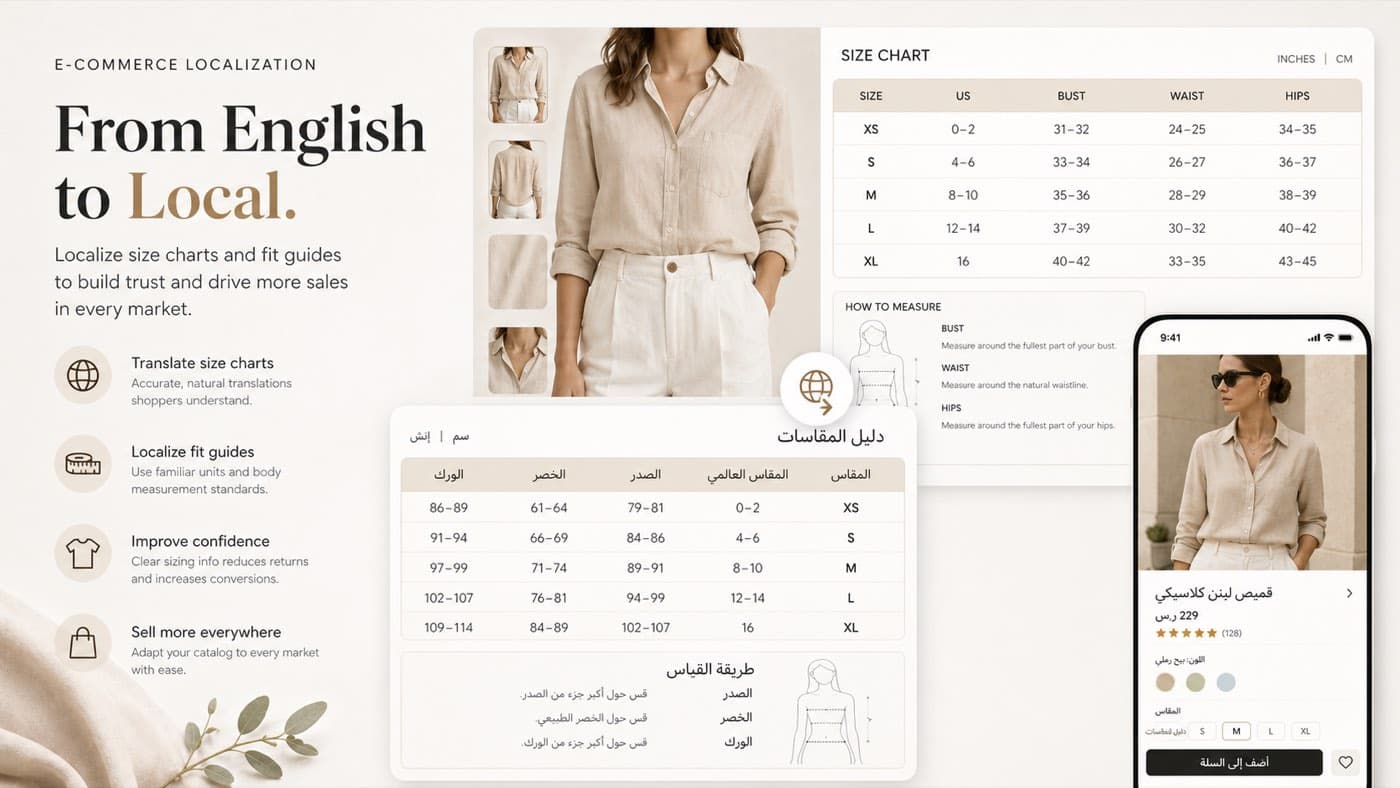
Size Chart Image Translator for Apparel Brands
If you sell apparel across markets, the short answer is simple:
yes, translating size chart images is worth doing, and it is usually one of the fastest ways to reduce hesitation, lower confusion, and make product pages feel more local.
That is especially true when the size guide lives inside an image rather than as selectable page text.
For many apparel brands, the size chart is one of the last things to get localized. Product titles get translated first. Descriptions follow. Ads get adapted. Then the customer lands on the product page and finds the most decision-critical visual still written in another language.
That is where conversion friction starts.
A size chart image translator helps brands adapt existing size-guide graphics into new languages without redrawing every file from scratch. Done well, it does more than change words. It protects clarity, preserves layout, and helps the customer answer the question that matters most: “Will this fit me?”
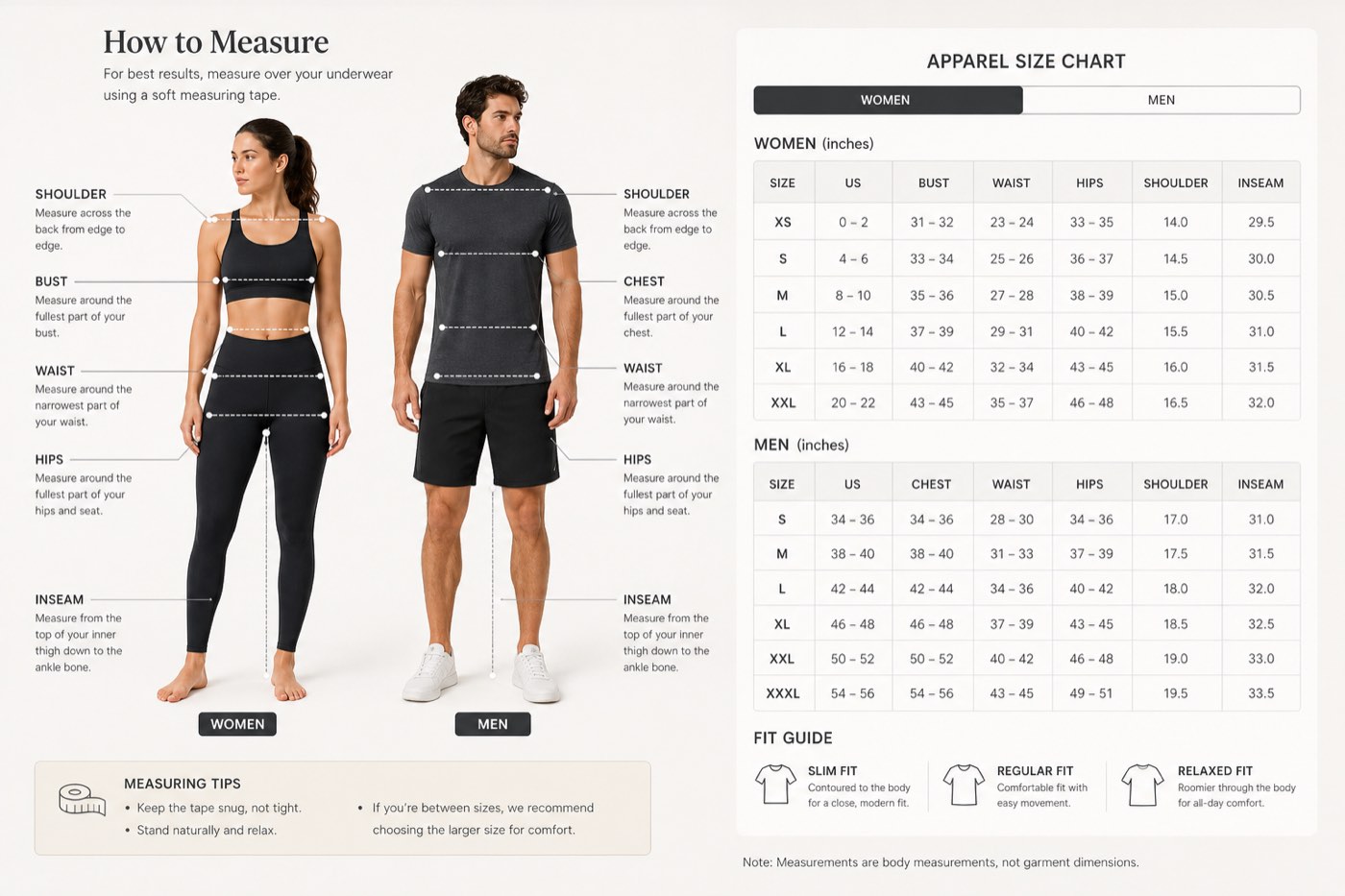 Caption: A translated size chart should remove doubt, not add another layer of interpretation.
Quick answer: when should a brand translate size chart images?
If any of the following is true, the answer is usually yes:
- your size guide exists mainly as an image
- your shoppers buy across languages or markets
- fit is a major purchase risk for your category
- your return rate is sensitive to sizing confusion
- your ads and product pages are localized, but your size guide is not
For apparel brands, size charts are not secondary content. They are part of the buying decision itself.
Why size chart localization matters more than many teams think
Customers can forgive a slightly awkward product description faster than they forgive confusion around fit.
When someone is buying a dress, a pair of jeans, a jacket, or even basic activewear, the size guide is often where the purchase either becomes safe or starts to feel risky.
If the chart is difficult to understand, shoppers hesitate. If they hesitate, they leave, choose the safer brand, or buy with lower confidence and return later.
That is why size chart images do three important jobs at once:
- they reduce uncertainty
- they make the product page feel trustworthy
- they help the shopper self-qualify faster
For global apparel brands, that makes the size chart one of the highest-leverage images to localize.
What a size chart image translator should actually help with
A useful size chart image translator is not just a text conversion tool.
It should help you keep the chart usable after translation by preserving:
- table structure
- spacing between rows and columns
- measurement labels
- unit clarity
- body references
- mobile readability
That last point matters more than it sounds. Many size-chart images are already dense in English. Once the text changes, poor spacing can make the chart harder to read than before.
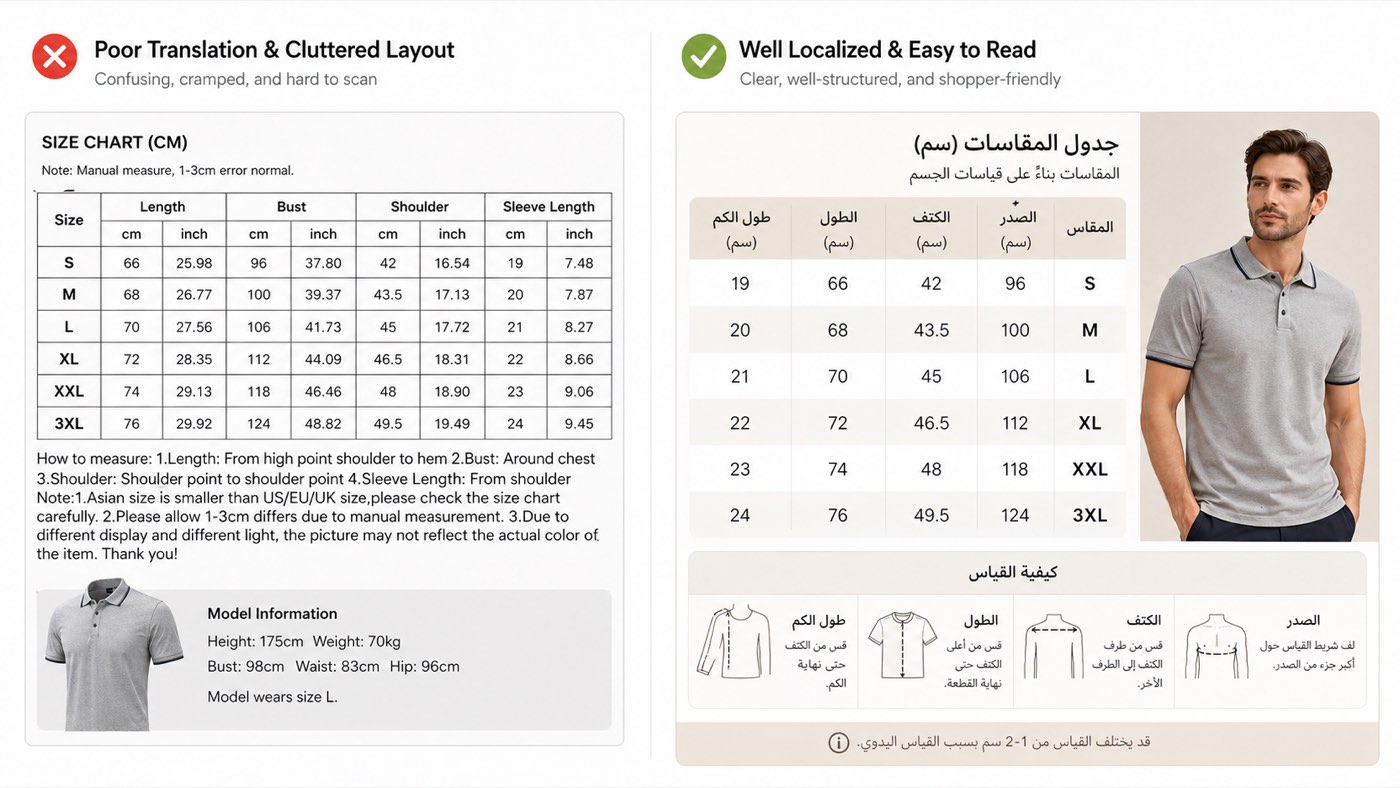 Caption: The goal is not just translated words. The goal is a chart that still feels quick and safe to use.
Which size chart images should be localized first
Do not start with every chart in your library. Start with the ones that create the most business impact.
1. Best-selling core SKUs
If a few hero products drive most of your revenue, localize those size charts first. That is where reduced friction pays back fastest.
2. High-return categories
For items where returns are strongly tied to fit confusion, localized size charts can improve the customer’s confidence before checkout.
Typical examples:
- denim
- dresses
- tailored tops
- bras and intimates
- sportswear and compression wear
3. Paid-traffic landing pages
If you are sending localized paid traffic to a product page, but the size chart is still in English, the experience breaks at the point of decision.
4. Marketplace product images
On some marketplaces, brands rely on image-based size guides more heavily than on dynamic page modules. Those visuals should be localized early.
What usually goes wrong when brands translate size charts
Size-chart localization often fails in very predictable ways.
The labels are translated, but the chart is harder to scan
This is common when translated text is longer and no spacing adjustments are made.
Units are technically present, but not visually clear
If inches, centimeters, chest, waist, hip, inseam, and shoulder width are not easy to distinguish at a glance, the chart still creates friction.
The chart becomes visually crowded on mobile
A size chart may look acceptable on desktop and still fail on a phone, where most shoppers actually make the decision.
The image looks edited
Patchy text removal, blurry backgrounds, or inconsistent alignment make the guide feel less trustworthy, even if the information is correct.
Different products use different terminology
When one chart says “waist” one way and another product uses a different term or style, customers start doing more interpretation than they should.
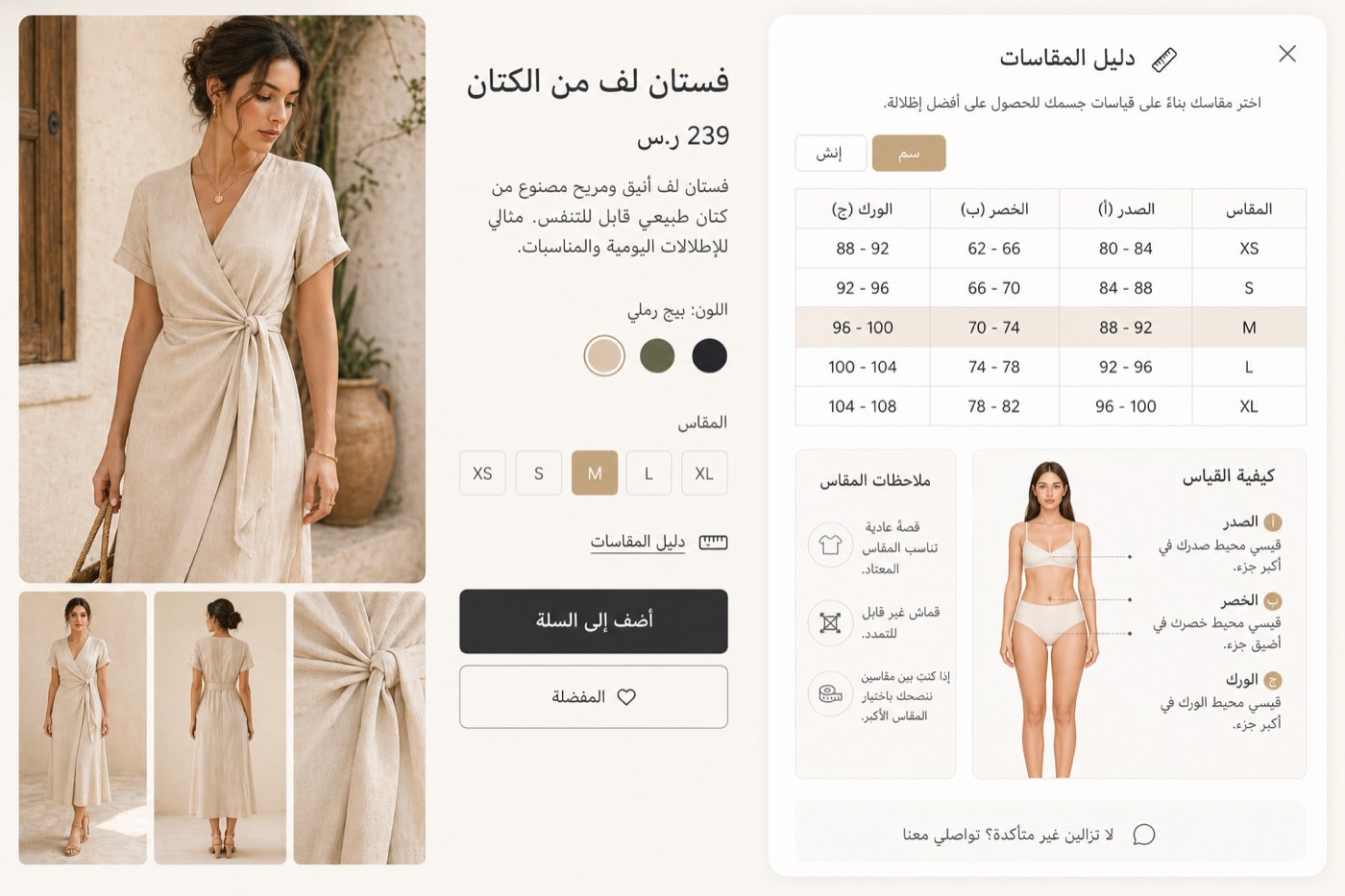 Caption: A strong size chart supports the entire product page by making fit feel easier to judge.
A practical workflow for translating size chart images
For most brands, the best process is not to rebuild charts manually unless the visual system already needs redesign.
It is usually better to adapt existing high-performing assets with a repeatable workflow.
Step 1: Start with the live chart customers already see
Use the real product-page chart, not an idealized redesign brief. If customers already use that structure, keep the logic familiar.
Step 2: Translate the text inside the chart
That includes:
- size labels
- measurement headers
- fit notes
- unit guidance
- body measurement instructions
Step 3: Preserve layout and readability
After translation, review:
- row spacing
- column spacing
- text wrapping
- contrast
- mobile legibility
If the translated chart takes longer to understand than the original, it is not finished yet.
Step 4: Review it like a shopper, not a designer
Ask:
- can someone find their measurement quickly?
- can they tell what unit the chart uses?
- can they compare sizes without zooming excessively?
- does the guide still feel trustworthy at first glance?
Step 5: Standardize the language across products
Once the terminology is working, reuse it consistently across all relevant categories.
That turns localization from one-off editing into a usable operating system.
Where this matters most
This workflow is especially useful for:
DTC apparel brands running multilingual Shopify stores
The product page may already be localized, but if the size chart is still image-based and still English-only, the page is not really complete.
Marketplace sellers using size-chart infographics
If the size guide is embedded in listing images, translating it is often one of the clearest ways to improve perceived market readiness.
Teams managing many variants across regions
Brands with multiple fits, cuts, or collections need a localization workflow that scales without reopening every source file manually.
Agencies and e-commerce service providers
Size charts are one of the most common repetitive edits in apparel localization. A strong process saves a lot of production time.
Why VOKWA AI fits this use case
VOKWA AI is useful here because the job is not “translate a chart” in the abstract. The real job is:
turn an existing size-guide image into a localized, readable, publish-ready asset without rebuilding it from zero.
For apparel brands, that usually means:
- accurate in-image text handling
- clean background preservation
- better readability after translation
- less manual rework across many SKUs
That is what makes a size chart image translator commercially useful instead of just technically interesting.
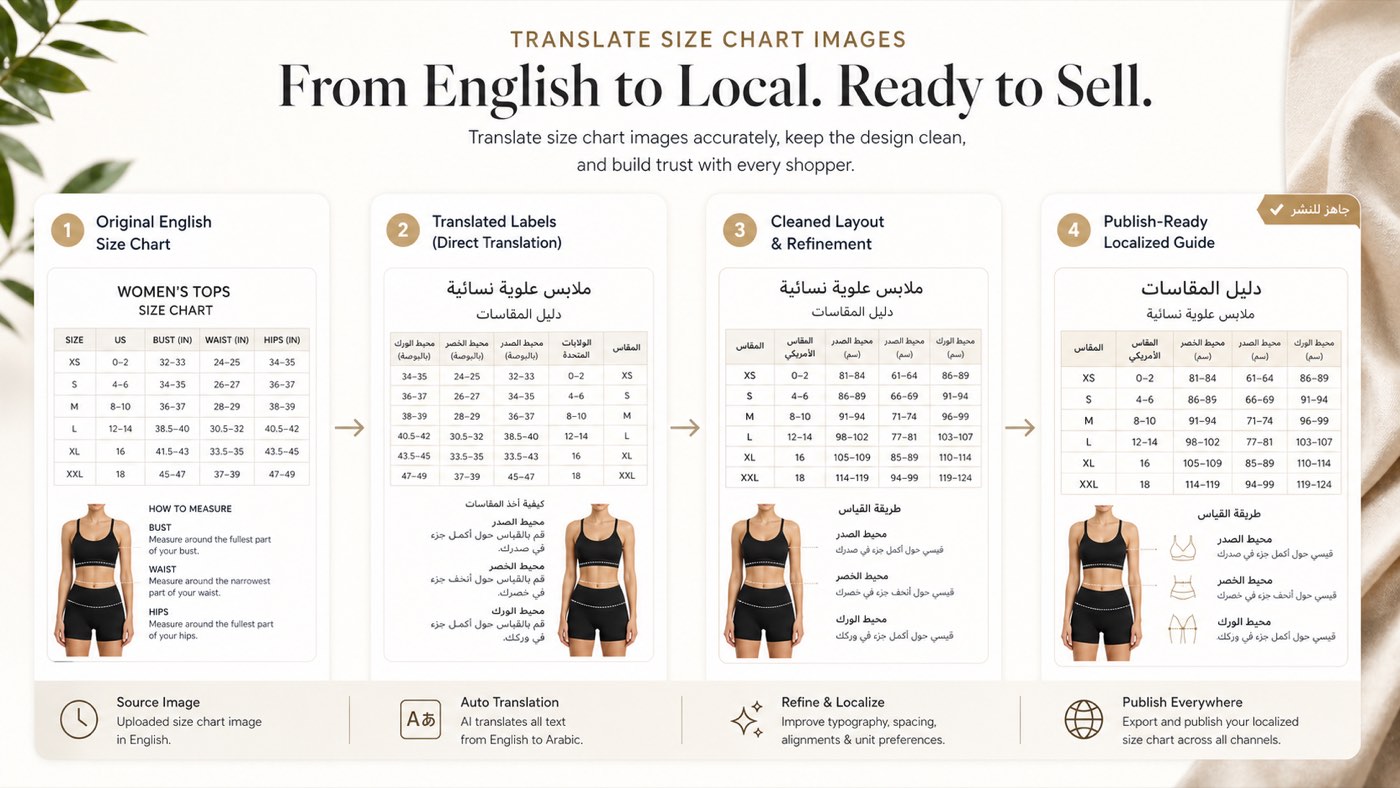 Caption: The best workflow keeps the chart familiar, readable, and ready to publish across storefronts and marketplaces.
Final thought
A localized size chart does not just answer a support question. It removes doubt at the moment of purchase.
That makes it one of the most practical image-localization tasks an apparel brand can prioritize.
If your page copy is localized but your size guide still feels foreign, you still have a conversion gap. Start there.
If you need to translate size chart images faster without manually rebuilding every version, VOKWA AI can help you turn existing charts into cleaner, more usable assets for global shoppers.
FAQ
What is a size chart image translator?
A size chart image translator is a workflow or tool that translates the text inside a size-guide image while preserving the structure, readability, and visual quality of the chart.
Should apparel brands translate size chart images?
Usually yes, especially when fit is an important buying decision and the size guide exists as an image rather than selectable page text.
Which size chart images should be localized first?
Start with best-selling products, high-return categories, paid-traffic landing pages, and marketplace listings that rely heavily on image-based size guides.
Why is size-chart localization more than translation?
Because the chart still has to be easy to scan, clear on mobile, and visually trustworthy after the text changes.